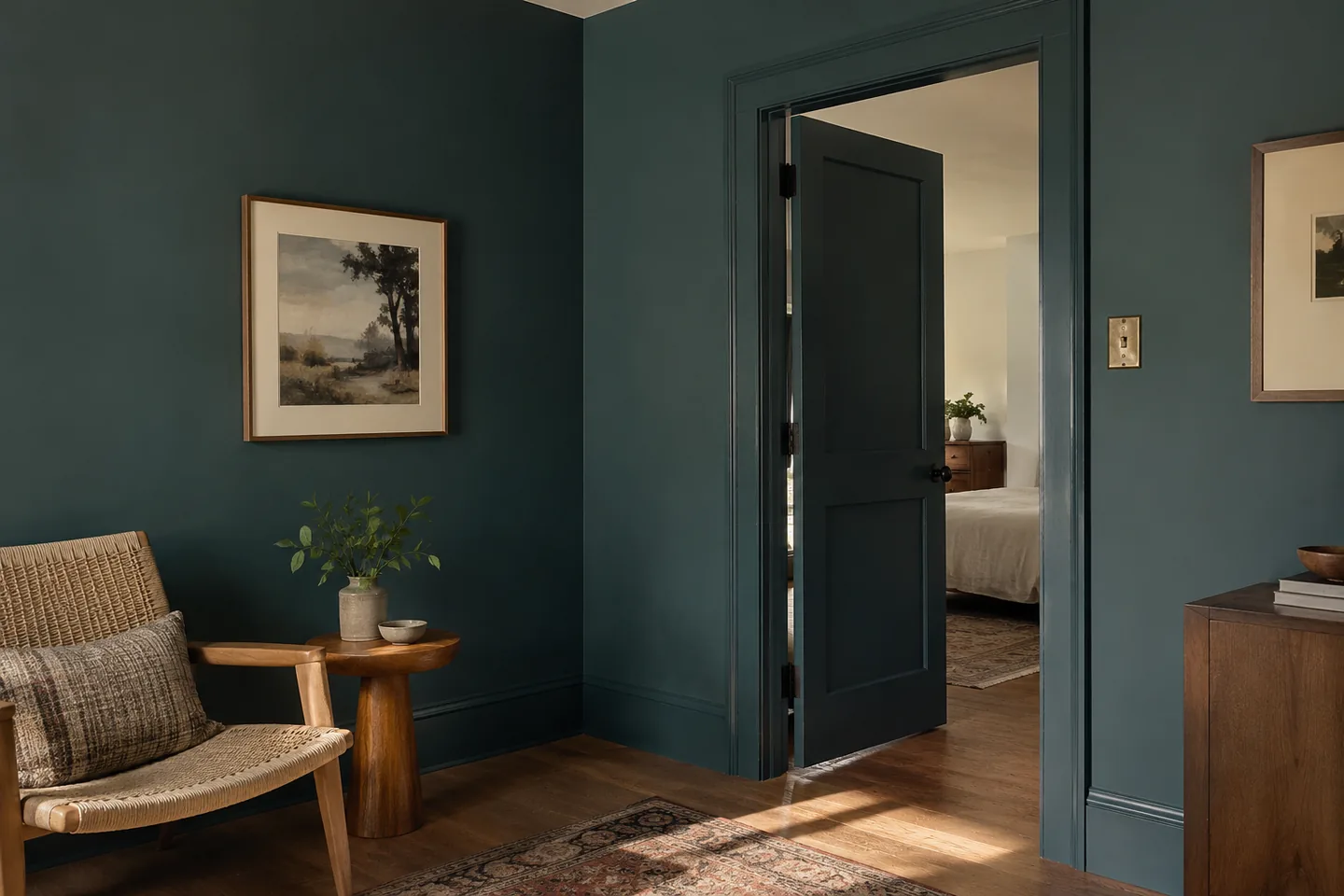
Decide how far the colour goes.
“Everything the same colour” needs a surface list. Does it include the ceiling, door faces, door edges, window trim, baseboards and built-ins? What happens on the other side of a doorway? Set those boundaries before the quote.
You can keep the ceiling lighter, carry the colour onto it or use a separate shade. Each choice changes the appearance and the scope. In an open-plan home, also decide where the room ends and the next colour begins.
The colour can match without the finish matching.
Walls and frequently handled doors have different demands. A suitable trim coating may have more sheen than the wall paint, creating a subtle distinction even in the same shade.
Check the proposed combination with physical samples. Colour names alone do not guarantee an identical appearance across coatings, materials and lighting. The final choice should include product, sheen and surface as well as colour.
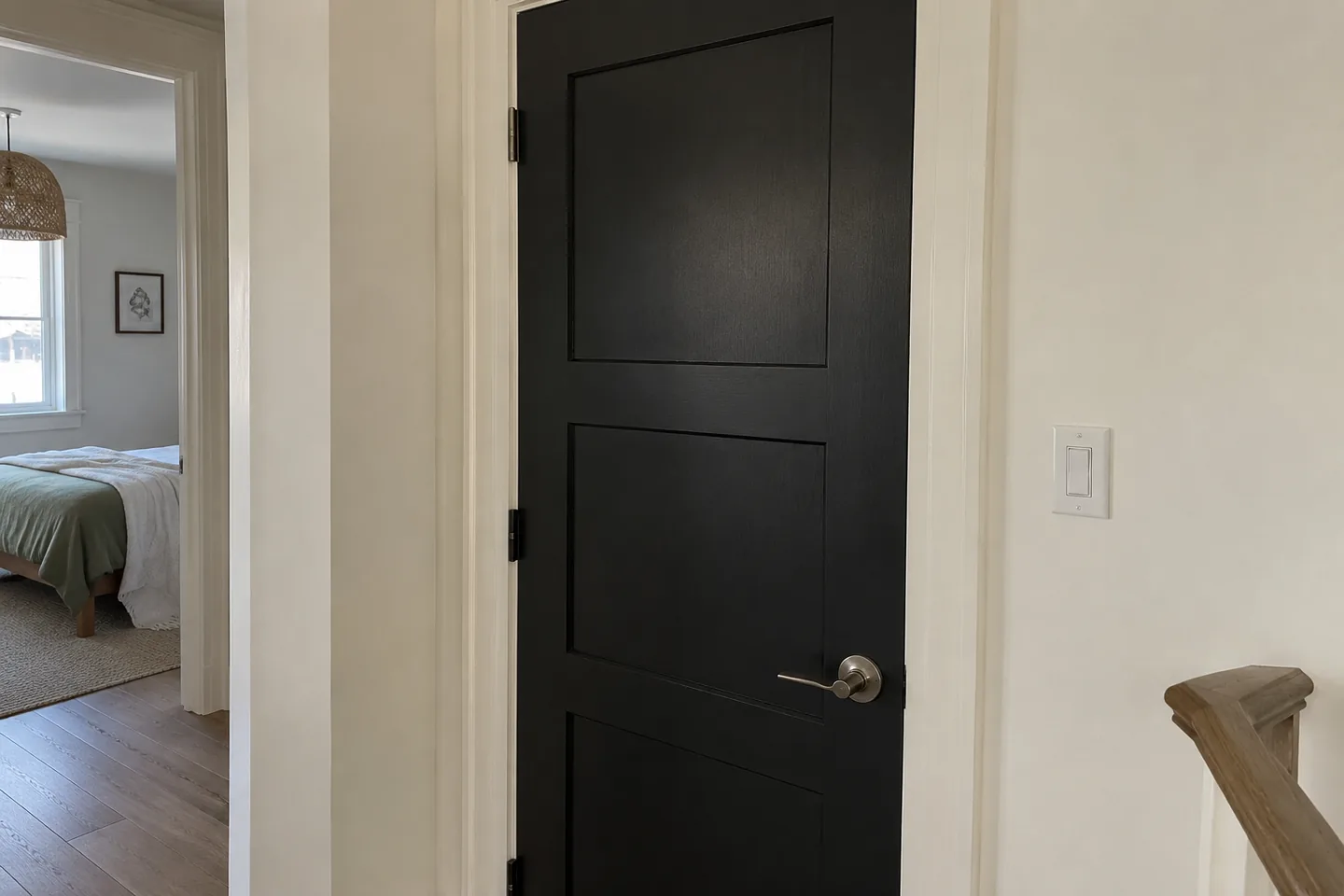
List every surface.
Use walls, ceiling, baseboards, door casing, door faces and window trim as separate entries. Mark the surfaces staying as they are.
Choose the contrast you want.
Compare a matching trim colour with a lighter trim sample. Look from the adjoining room as well as inside the room.
Agree the finish schedule.
Record which product and sheen go on each surface, including door sides that face a different room.
Include the existing woodwork condition.
A previously painted baseboard, a stained timber door and a factory-finished cabinet are different starting surfaces. Send close photos of each and any known product details. Chips, glossy finishes and worn edges need assessment before the new coating is selected.
Trim and door painting are outside our wall-only starting packages. Ask for a complete scope if you want a continuous colour effect, including preparation and any separate return visits required by the coating or work sequence.
A few details before you decide
Does matching trim make a small room look larger?
It can reduce the contrast between edges, but the effect depends on the room and colour. Test the idea rather than treating it as a guaranteed change in perceived size.
Can I use the wall paint on the door too?
Only if the chosen product is suitable for that surface and use. Agree the door coating separately.
What about the side of the door facing the hall?
Specify it. The two faces may use different colours, so the edges and frame need a clear plan as well.
Useful references
CALL OR TEXT GOOD PAINTING
Show us what you have in mind.
Send your neighbourhood, a few photos and the rooms or surfaces you want painted. We’ll work through the scope with you.