| Stage | What it tells you | What it does not settle |
|---|---|---|
| Touch-dry | The surface has reached the product’s stated dry-to-touch stage. | Readiness for cleaning, pressure or heavy handling. |
| Recoat time | When another coat may be applied under the stated conditions. | When the room can return to every normal activity. |
| Cure period | The coating is developing its intended final properties. | A universal timetable shared by all products. |
Plan the room around the next activity.
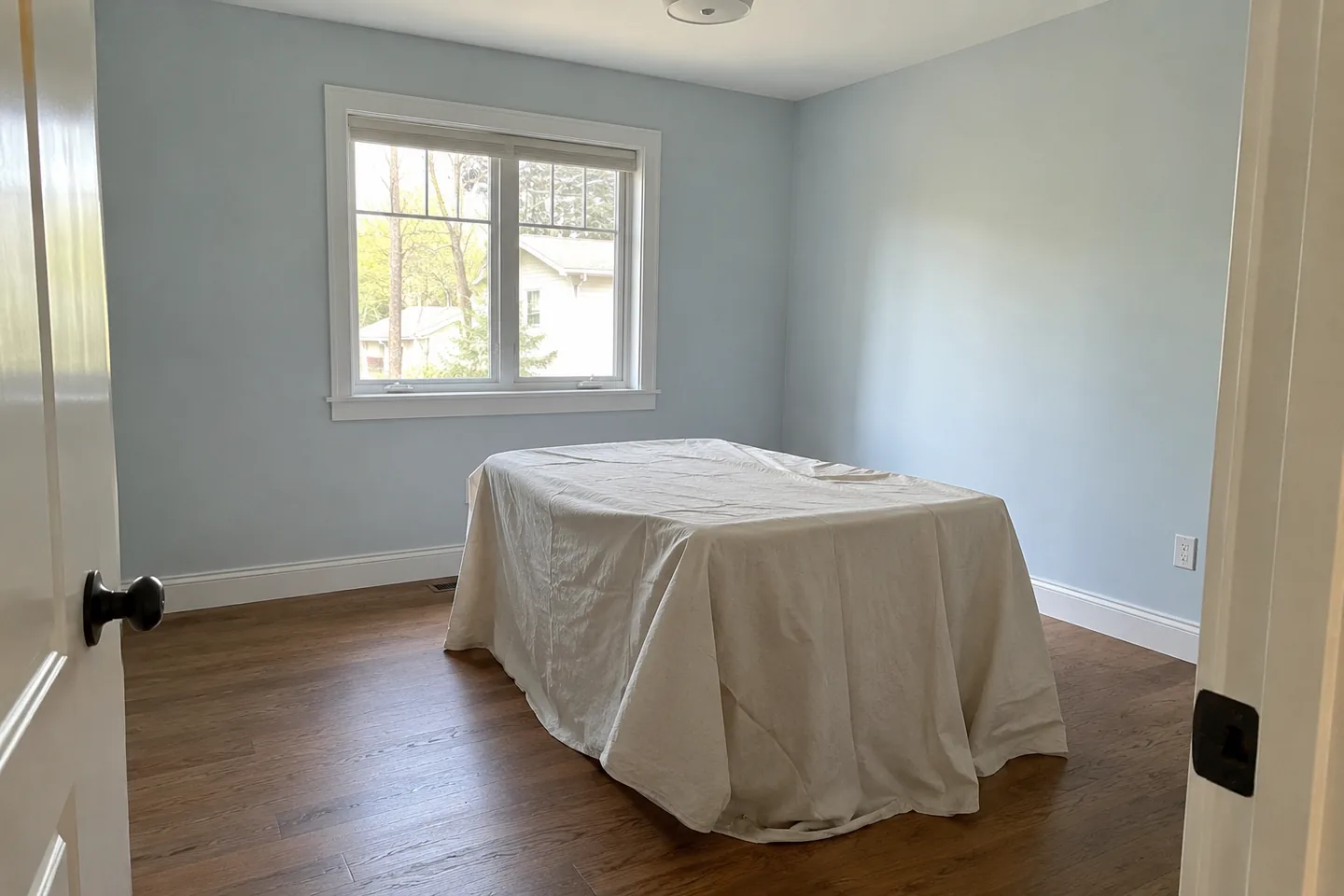
Tell your painter what needs to happen after painting: moving a bed against the wall, hanging pictures, reinstalling shelves, closing doors or cleaning a busy hallway. Each involves different contact with the coating.
Ask for the selected product’s instructions and a handover plan. Do not use a surface that feels dry as the only test. Keep the colour, product and sheen details with your household records so you can check care instructions later.
Room conditions are part of the schedule.
Temperature, humidity, airflow and how the coating was applied can affect drying. Follow the product guidance for ventilation and suitable conditions. Adding heat or forcing airflow without regard to the instructions is not a substitute for the right application conditions.
For a basement or a room used mainly at night, discuss how the space will be ventilated and when you need access. Share those constraints before agreeing the work dates.

Doors need a handling plan too.
Painted surfaces pressed against one another can be vulnerable before the coating is ready. Ask when doors can be closed normally and how hardware will be handled. The door coating may have different directions from the wall paint.
If another trade follows the painter, pass along the care requirements. Floor installation, furniture assembly and staging can all involve contact with fresh paint. Leave the sequence in writing so the next person knows what has been agreed.
A few details before you decide
Can I clean a newly painted wall the next day?
Check the paint manufacturer’s cure and cleaning guidance first. Dry-to-touch time is not permission to scrub.
How soon can I sleep in a painted bedroom?
Follow the product’s ventilation and occupancy guidance and discuss your household’s needs before work. A smell test or a general internet timing rule is not a substitute for those instructions.
Does every latex paint cure in the same number of days?
No. Check the specific product and the stated conditions. Avoid transferring one product’s timetable to another.
Useful references
CALL OR TEXT GOOD PAINTING
Show us what you have in mind.
Send your neighbourhood, a few photos and the rooms or surfaces you want painted. We’ll work through the scope with you.